Đang tải thông tin quảng bá...
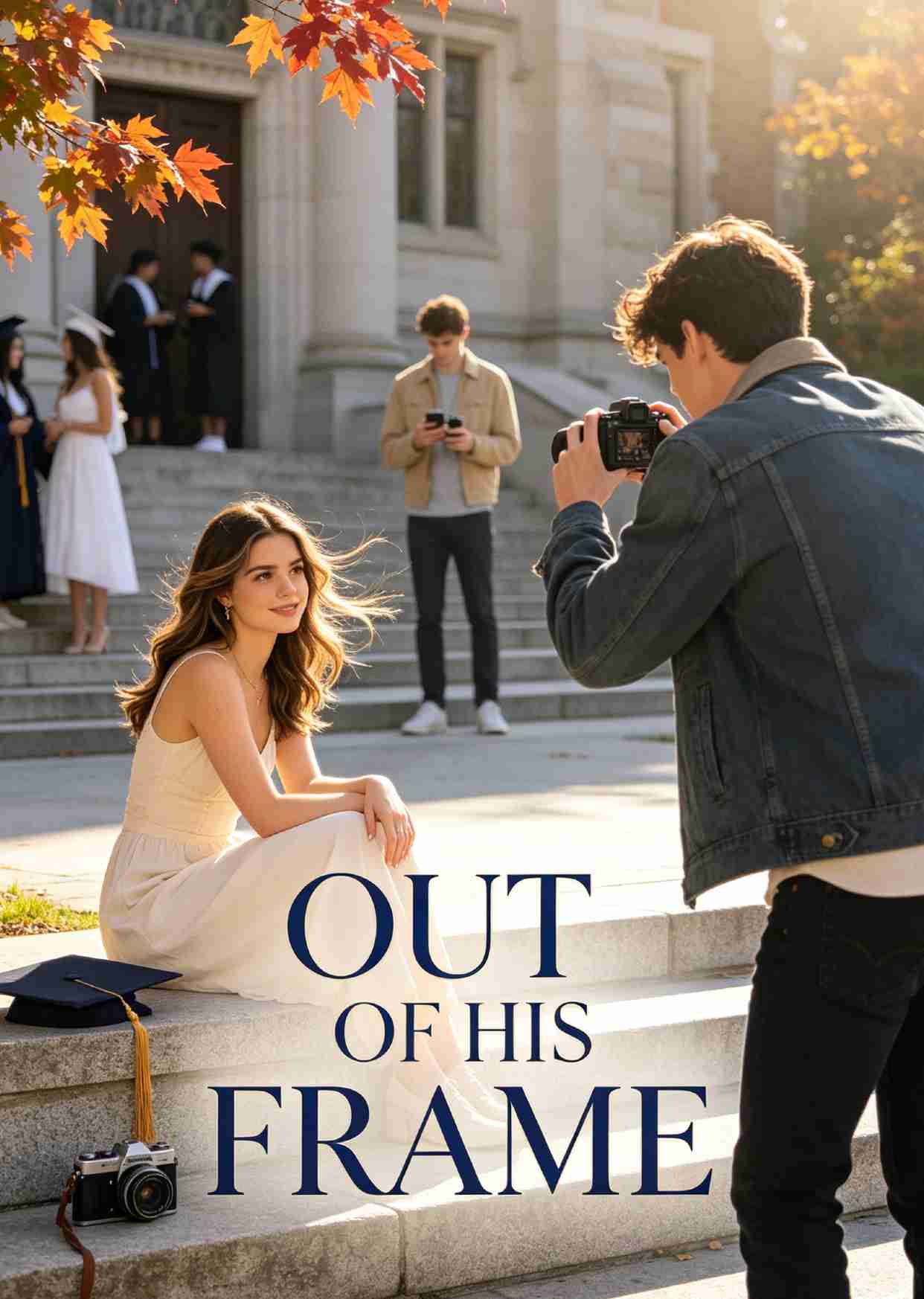
OUT OF HIS FRAME
 GoodNovel
Hoàn thành
GoodNovel
Hoàn thành
At the start of graduation season, my boyfriend took more than two hundred photos of Madison Vale. Chase Whitman was president of Westbridge University’s photography club. He knew how to find flatte...
Chương (1)
第1章
At the start of graduation season, my boyfriend took more than two hundred photos of Madison Vale.
Chase Whitman was president of Westbridge University’s photography club. He knew how to find flattering light and how to coax people out of stiff smiles.
Madison stood beneath the maples outside the library in a white dress, her graduation cap tucked under one arm.
“Am I taking up too much of your time?” she asked.
Chase checked the last few shots and smiled. “You make my job easy.”
When it was finally my turn, he barely looked at me.
“Stand by the tree.”
He clicked the shutter twice and lowered the camera.
“Done.”
I stared at him. “That’s it?”
He turned the screen toward me. In one photo my eyes were half-closed; in the other, a branch shadow slashed diagonally across my face.
“Can we try again?”
Chase sighed. “Avery, you always tense up. Fifty more takes won’t change that.”
Ten minutes later, my phone buzzed.
He had posted in the Westbridge Buy:
Twenty dollars for someone to spend ten minutes taking a few graduation photos of my girlfriend. Nothing fancy. She just needs something usable.
Half an hour later, a stranger replied.
I sent him my location, then added: Just so you know, I’m not very photogenic.
His answer came almost immediately: That usually says more about the photographer than about the subject.
When Rowan Hayes arrived, he looked at Chase’s two photos and said, “He didn’t even try.”
An hour later, he sent me the raw files.
No filters, no heavy retouching. Just me on the library steps, my hair loose in the wind and my eyes brighter than I remembered them being.
Chapter 1
Rowan sent the rest of the photos that evening.
I went through them slowly, bracing for the flaws Chase always found first: a stiff smile, a bad angle, some proof that the first few shots had been pure luck.
Instead, I kept finding myself.
My dress was wrinkled at the waist, and the wind had tugged several strands of hair from their pins. In one photo, I wasn’t even looking at the camera—someone nearby had dropped a graduation cap, and Rowan had caught me a split second before I laughed, my head half-turned, my expression unguarded.
Nothing about the picture was perfect, but I looked comfortable.
That was the part I barely recognized.
For years, Chase had told me to relax whenever he photographed me.
“Stop thinking so much.”
“Smile normally.”
“Why do you make this so difficult?”
The harder I tried, the worse I looked. Eventually, I stopped asking him to take pictures of me. I stayed behind the camera instead—holding reflectors, organizing equipment, sorting through hundreds of photos of everyone else.
Being useful was easier than being watched.
My roommate, Leah, came in carrying an iced coffee and found me sitting on the edge of my bed.
“Did the twenty-dollar photographer actually show up?”
I looked at her. “You saw Chase’s post?”
“Most of the senior class probably did.”
Heat climbed into my face.
Leah sat beside me. “It made him look like an ass, Avery. Not you.”
I handed her my phone.
She swiped through the photos, and her expression changed. “These are yours?”
I nodded.
“You look beautiful.”
“You sound surprised.”
The words came out sharper than I intended.
Leah studied me for a moment. “I’m surprised you look relaxed.”
That somehow hurt more.
She opened Instagram and turned her phone toward me. Madison had already posted her graduation pictures.
Nine photos filled the screen. She stood beneath the maple trees in her white dress, laughing over one shoulder while the wind lifted her hair. In another, she sat on the stone wall outside the library with her diploma cover resting on her knees.
Couldn’t have asked for a better photographer, she had written. Chase always knows how to make me feel comfortable in front of the camera.
The comments were full of praise. Someone said the pictures belonged on the university website. Another called Madison the perfect Westbridge girl.
I enlarged the photo of her laughing.
I remembered that moment. Her smile had started to stiffen, so Chase lowered his camera and teased her until she forgot she was posing. He had waited for the wind, adjusted her shoulders, and taken the shot only when everything was right.
He knew how to make people comfortable. He had simply never done it for me.
Leah took the phone from my hand. “Don’t do this to yourself.”
“I’m fine.”
“You’ve been staring at the same picture for a full minute.”
A notification appeared at the top of her screen—Westbridge’s official Instagram account announcing a student story campaign called This Is Where I Found Myself. One graduating senior’s film would anchor the following year’s admissions materials and social media campaign.
Madison had been talking about it for weeks. Everyone in the photography club assumed she would be selected, and Chase was already planning her submission.
Leah glanced from the announcement to the pictures on my phone.
“You should apply.”
I laughed. “No.”
“Why not?”
“They want someone who looks natural on camera.”
“You do.”
“In six photographs taken by someone who knew what he was doing.”
“That sounds like an argument in your favor.”
I shook my head, but I opened the link anyway.
Applicants needed one portrait and a sixty-second video about their experience at Westbridge. The deadline was nine days away.
Nine days wasn’t enough time to become the kind of person who belonged at the center of a university campaign.
Then again, Rowan hadn’t made me look like someone else. He had only waited long enough for me to stop expecting the worst.
My phone buzzed.
Rowan had sent a short message beneath the folder of photographs: Saw the Westbridge campaign. You should think about it.
I stared at the screen.
I’m not exactly admissions material, I replied.
His answer came a minute later: Depends on whether they want a person or a brochure.
Leah leaned over my shoulder. “I like him.”
“You don’t know him.”
“I know he took better photos of you in an hour than your boyfriend has in four years.”
I locked my phone. “That doesn’t mean I should apply.”
“No. The fact that you want to apply means you should.”
“I never said I wanted to.”
“You downloaded the guidelines.”
She was right. The document was already open on my laptop.
I spent the rest of the evening telling myself I was only curious. By midnight, I had created an application account. By one in the morning, I had filled in my name, major, and graduation year.
The only blank section asked why I wanted to represent Westbridge.
I closed the laptop without answering it.
The next afternoon, I went to the photography club room to return the reflector Chase had left with me. He was sitting at the long table by the windows, cleaning a lens. Madison sat beside him, reviewing photos on his laptop, her chair close enough that their shoulders almost touched.
Chase glanced up. “Where did you go yesterday?”
The question caught me off guard. “What?”
“After the shoot. You disappeared.”
“You’d already found someone else to take my pictures.”
His hand paused over the lens.
Madison looked up from the screen. “Did they turn out okay?”
“They did.”
“Really?” Her surprise was quick, but not quick enough.
I placed the reflector in the equipment cabinet. When I pulled out my laptop to update the equipment log, the campaign page was still open.
Chase noticed immediately. “You’re applying?”
“I’m considering it.”
He gave a short laugh. “Avery, seriously?”
I hated that laugh. It made my decision sound childish before I had even made it.
“Yes, seriously.”
“Is this because of yesterday?”
“No.”
“You were upset about the photos. I get that. But turning this into a competition is a little much.”
“I didn’t say it was a competition.”
Madison closed the laptop halfway. “It’s a very public campaign. People online can be cruel. I’d hate for you to put yourself out there and get hurt.”
Her voice was gentle enough that disagreeing would make me seem defensive.
Chase nodded. “I’m trying to be honest with you.”
“You’ve always been honest.”
He missed the meaning beneath my words.
“You know you freeze in front of a camera,” he continued. “Some people are more comfortable behind the scenes. That isn’t an insult.”
Behind the scenes—where I carried his equipment, edited his photos, and watched him make other women feel beautiful.
For years, he had said things like that with such certainty that I never thought to question them. Now I remembered Rowan looking at Chase’s two photographs and saying, He didn’t even try.
Maybe Chase’s opinion had never been the truth. Maybe it was only the version I had heard most often.
“I’m still applying,” I said.
His expression tightened. “Who’s going to shoot it?”
“Rowan.”
Madison tilted her head. “The guy from the twenty-dollar post?”
There was something faintly amused beneath her concern.
Chase set the lens cloth down. “You’re trusting a stranger with an admissions campaign?”
“He took good pictures.”
“Graduation portraits are different from video. You don’t know anything about him.”
“I know he took the time to help me relax.”
The room went quiet.
Chase stared at me as though I had accused him of something. “You’ve known him for one day.”
“And he still managed to take more than two photos.”
His jaw tightened.
Chapter 2
The next afternoon, Rowan was waiting outside the west entrance of the library. He had traded the baseball cap for sunglasses, but the same worn camera bag hung from his shoulder. A small video camera sat on a tripod beside him.
“You came,” he said.
“You gave me a time and place.”
“I wasn’t sure that would be enough.”
I couldn’t tell whether he was joking.
Rowan looked me over once—not in the slow, appraising way that made me want to adjust my clothes. He seemed to be checking how my white shirt and jeans worked against the stone library walls.
“This is good,” he said.
“I didn’t dress for a campaign.”
“That’s why it’s good.”
He handed me a small microphone and showed me where to clip it beneath my collar. His instructions were brief and practical. He asked before moving a strand of hair away from the mic and kept his attention on the equipment, not my body.
Once the camera was ready, he pointed toward the library steps.
“Walk up, stop near the doors, then look back.”
“That’s all?”
“For now.”
I made it halfway up before looking directly at the lens. My shoulders tightened.
“Keep going,” Rowan said.
“I already messed it up.”
“You looked at the camera. That isn’t a federal crime.”
I glanced back at him.
“Again. This time, think about where you’re going.”
Chase would have told me where to put my hands, how far to turn my chin, and which expression looked least awkward. By the time he lifted the camera, I would have been trying to remember six different instructions.
Rowan only said, “Slow down.”
The second take felt less stiff. On the third, he asked me to open the library door, then pause as if someone had called my name.
I turned.
“That one,” he said.
“What did I do?”
“Nothing. You stopped trying to look right.”
He moved the tripod closer to the railing. “Now we test sound.”
I stared at the camera. “You want me to talk?”
“It is a video campaign.”
“I thought today was only about movement.”
“I lied.”
I almost smiled.
Rowan stepped behind the camera. “Tell me why you chose Westbridge.”
The answer should have been easy. I had written versions of it for orientation brochures and photography club captions.
Strong academic programs. Welcoming community. Opportunities for personal growth.
The kind of language that sounded polished and meant almost nothing.
“I liked the campus,” I said.
Rowan waited.
“And the communications program.”
He continued waiting.
“That’s all I have.”
“No, it isn’t.”
“You don’t know that.”
“You spent four years here. Either something happened to you, or Westbridge should give you some tuition back.”
A laugh escaped before I could stop it.
He adjusted the focus. “There. That’s closer.”
“To what?”
“A real answer.”
I looked away from the lens.
“Forget the campaign,” he said. “Imagine a high school senior asked whether coming here was worth it. What would you tell them?”
That was different.
I thought about my first semester, when I had called my mother from a bathroom stall because everyone in my orientation group seemed more confident than I was. I thought about the first article I wrote for the student magazine, and the night Leah and I stayed in the library until three in the morning while the custodians turned off the lights around us.
“I’d tell them it doesn’t feel like your life at first,” I said.
Rowan raised the camera again.
“You arrive, and everyone else seems to know who they’re supposed to be. They have friends already. They answer questions in class without rehearsing first. You think you’re the only person who got admitted by mistake.”
My fingers loosened at my sides.
“But eventually, you find one place where you don’t feel like an outsider. Then another. One day, you realize you stopped planning how to leave.”
Rowan stayed quiet for several seconds.
“Was that terrible?” I asked.
“No. That’s your campaign.”
Before I could answer, someone called my name from across the quad.
Chase stood near the fountain with Madison. She wore a pale yellow dress and held a stack of textbooks against her chest. A second-year club member was managing the reflector while Chase crouched behind his camera.
Madison smiled when she saw me. Chase didn’t.
He crossed the lawn. “You’re filming here?”
Rowan checked the audio levels. “That was the plan.”
Chase looked at the camera, then at the microphone clipped to my shirt. “You’ve already started?”
“We’re testing,” I said.
He turned to Rowan. “Have you shot admissions material before?”
“Yes.”
“For Westbridge?”
“A few things.”
“What things?”
Rowan adjusted the tripod. “Things with deadlines.”
I looked down so Chase wouldn’t see me smile.
His attention returned to me. “Madison’s shooting her campus scenes today. I thought you were going to help with the reflector.”
“You didn’t ask me.”
“I mentioned it at the club.”
“You said you needed someone. You didn’t say it had to be me.”
Chase frowned as though there had always been an understanding I had failed to honor. “You usually help.”
Usually, I did. I carried his equipment, checked Madison’s hair between takes, watched their bags, and helped him sort files until midnight.
“I have my own shoot,” I said.
His gaze flicked toward Rowan. “This is more important than the club’s campaign submission?”
“It’s my submission.”
Chase lowered his voice. “You don’t have to prove anything because you’re mad at me.”
Before I could answer, Madison called from the fountain.
“Chase? The light’s changing.”
He turned immediately. “I’ll be there in a second.”
His voice softened without effort.
He went back to Madison and repositioned her beneath the trees. When she laughed at the wrong moment, he lowered the camera.
“No rush,” he told her. “We’ll do it again.”
The words carried across the lawn.
My throat tightened.
Rowan glanced at me. “Want to move?”
“No.”
I watched Chase take another photograph.
For years, I had told myself he was impatient because he was tired, or the light was bad, or we were running late. The simpler truth was harder to admit: he had patience. He simply spent it elsewhere.
“I’m sure,” I said.
Rowan stepped behind the camera again. “Walk toward me and tell me one thing you’ll miss after graduation.”
“The library coffee.”
“That coffee tastes like burned cardboard.”
“You asked what I’d miss, not what was good.”
“Fair.”
I laughed, and this time I didn’t look away when I noticed the camera.
We recorded three more takes around the library and the arts building. Rowan never told me I looked beautiful. He told me when my pace was too fast, when my voice dropped at the end of a sentence, and when I was hiding my hands behind my back.
By the end of the hour, the camera no longer felt like an accusation.
We sat on the library steps while he reviewed the footage. In the final clip, I walked beneath the trees and talked about the way campus felt just before sunset. I hardly recognized the ease in my own voice.
“You didn’t change anything?” I asked.
“I adjusted the exposure.”
“My face?”
“Still yours.”
I watched the clip again.
Rowan packed away the microphone. “Do you want to submit?”
The question made my stomach tighten. Applying meant people would see it. Chase and Madison would see it. Strangers could pause the video and decide whether I belonged there.
But fear was no longer the only thing I felt.
“Yes,” I said.
Rowan zipped the camera bag closed. “Good. Tomorrow we stop testing.”
Chapter 3
Over the next five days, Rowan and I filmed the parts of Westbridge that rarely appeared in brochures: the library steps before sunrise, the communications building after rain, and the student center at dinner, when everyone looked tired enough to be honest.
Whenever I started sounding like an admissions page, Rowan lowered the camera.
“Would you actually say that to someone?”
“No.”
“Then don’t say it to the lens.”
By the fourth day, I stopped asking whether I looked bad. I started asking whether I sounded like myself.
We wrote the voice-over in a nearly empty campus café. My first draft was full of polished lines about opportunity and personal growth.
Rowan read it once and slid it back across the table. “This could be about any university.”
“That’s what admissions videos sound like.”
“It’s not what you sound like.”
I turned my pen between my fingers. “What am I supposed to say?”
“What were you like when you came here?”
“Quiet.”
“You’re still quiet.”
“Thanks.”
“That wasn’t criticism.”
I looked down at the page. “I thought everyone else already knew who they were. I didn’t, so I learned how to be useful.”
I told him about joining the photography club because I wanted to shoot, then slowly becoming the person who carried equipment, wrote captions, and edited Chase’s work instead.
“Did you ever stop wanting to take pictures?” he asked.
“No.”
The answer came too quickly.
I crossed out the final paragraph and wrote something new.
When I arrived at Westbridge, I thought belonging meant becoming louder, brighter, and more certain. It took me four years to understand that confidence can begin quietly—with choosing not to step out of the frame.
Rowan read it. “That’s the one.”
Our final shoot was at the old theater courtyard. Chase and Madison were filming on the lawn nearby. He had borrowed a stabilizer from the media department and recruited two photography club members to help.
Madison missed her mark during one take.
Chase lowered the camera without complaint. “No rush. We still have the light.”
I looked away.
Rowan positioned the camera beneath the stone arch. “Walk through the courtyard, then look back.”
“At what?”
“Whatever you’re leaving.”
On the first take, I moved too quickly. On the second, I watched the camera instead of where I was going. By the third, I had stopped thinking about what my face was doing.
I crossed beneath the arch and looked back at the campus where I had spent four years trying to earn my place.
Rowan let the camera run for several seconds.
“Cut.”
“That was it?”
“That was it.”
We edited the video that evening. Rowan handled the sound and color, but he made me choose every clip. When I tried to remove a close-up because I looked too serious, he paused the screen.
“You look like you’re thinking.”
“Admissions might want someone friendlier.”
“They’ll survive.”
I left the shot in.
The finished video was fifty-eight seconds long. It opened with the library before sunrise and moved through the campus as I knew it: the crowded café, the old elevator, the communications building still lit after midnight.
Then I appeared beneath the theater arch.
I used to think belonging meant becoming louder, brighter, and more certain. Now I think it can begin quietly, when you stop waiting for permission to take up space.
For once, I watched myself without searching for something to hate.
Rowan glanced at the time. “Deadline’s in twenty minutes.”
My hand hovered over the upload button. Rowan began packing his equipment.
“The file’s ready,” he said. “The rest is yours.”
I clicked submit.
Three days later, Leah burst into our room and shoved her phone toward me.
“You made the final five.”
My video appeared on Westbridge’s admissions page, with Madison’s directly beneath it. The comments under mine were already multiplying.
She feels like a real student.
This is the first one that actually made me want to go here.
How have I never noticed her before?
For a few minutes, I let myself feel happy.
Then the photography club group chat began filling with questions.
Who filmed Avery’s video?
That doesn’t look like student work.
Did she hire a professional team?
Madison messaged me privately: Congratulations. It turned out beautifully.
A second message appeared before I could reply: I didn’t realize the photographer Chase found had worked with the university before. Is he connected to admissions?
The question looked innocent. It wasn’t.
Chase called twice. When I ignored him, he texted: Who exactly is Rowan Hayes?
You didn’t ask before you hired him, I replied.
That was for graduation pictures. This is different.
Why?
Because this video is too polished to be normal student work.
He had watched the entire video and found it easier to believe I had cheated than to believe I had done something well.
By that evening, an anonymous campus account called Westbridge Unfiltered had posted two images side by side. The first was one of Chase’s graduation photos of me—eyes half-closed, face hidden by shadow. The second was a still from Rowan’s video.
From camera-shy to admissions finalist in one week. Talent, professional packaging, or AI?
The comments came quickly.
No student made that alone.
She probably hired a team.
The difference in her face is suspicious.
Isn’t her photographer connected to university marketing?
Leah reported the post, but screenshots were already circulating.
Then Chase commented: The university should verify that every entry followed the same production rules.
He had not directly accused me. He didn’t need to.
Madison liked the comment less than a minute later.
My phone rang. The caller ID read WESTBRIDGE ADMISSIONS.
“Avery Lin?” a woman asked.
“Yes.”
“This is Dr. Bennett from the admissions communications team. We’ve received questions about outside production assistance and digital alteration in your submission. We need to verify that the entry meets the campaign rules.”
My fingers tightened around the phone.
“Please come in tomorrow morning with the original footage, project files, and information about your cinematographer.”
After the call ended, an official email appeared in my inbox.
My place in the final round had been temporarily placed under eligibility review.