Đang tải thông tin quảng bá...
He Thought I Was Finally Learning. I Was Already Leaving.
 GoodNovel
Hoàn thành
GoodNovel
Hoàn thành
When Adriano Morelli realized I hadn’t submitted a single household request in three days, he called me himself for the first time in months. “Serafina,” he said, his voice smooth and patient, â...
Chương (1)
第1章
When Adriano Morelli realized I hadn’t submitted a single household request in three days, he called me himself for the first time in months.
“Serafina,” he said, his voice smooth and patient, “the clinic has been cleared. Your file is back on priority. See? When you stop making things difficult and learn how this family works, I make sure you’re taken care of.”
He always sounded the gentlest when he was reminding me who held the power.
What he didn’t know was that by the time his name lit up my screen, the divorce papers were already drafted.
From the outside, I had everything a woman could want: a guarded penthouse, a driver on call, designer clothes, and the last name of one of the most feared men in the city.
But almost none of it was mine.
The cards were monitored. Cash had to be approved. Staff took Viviana Costa’s orders before they ever listened to me. Even the wardrobe budget, my schedule, and access to the family office all ran through her hands.
Adriano called it convenience.
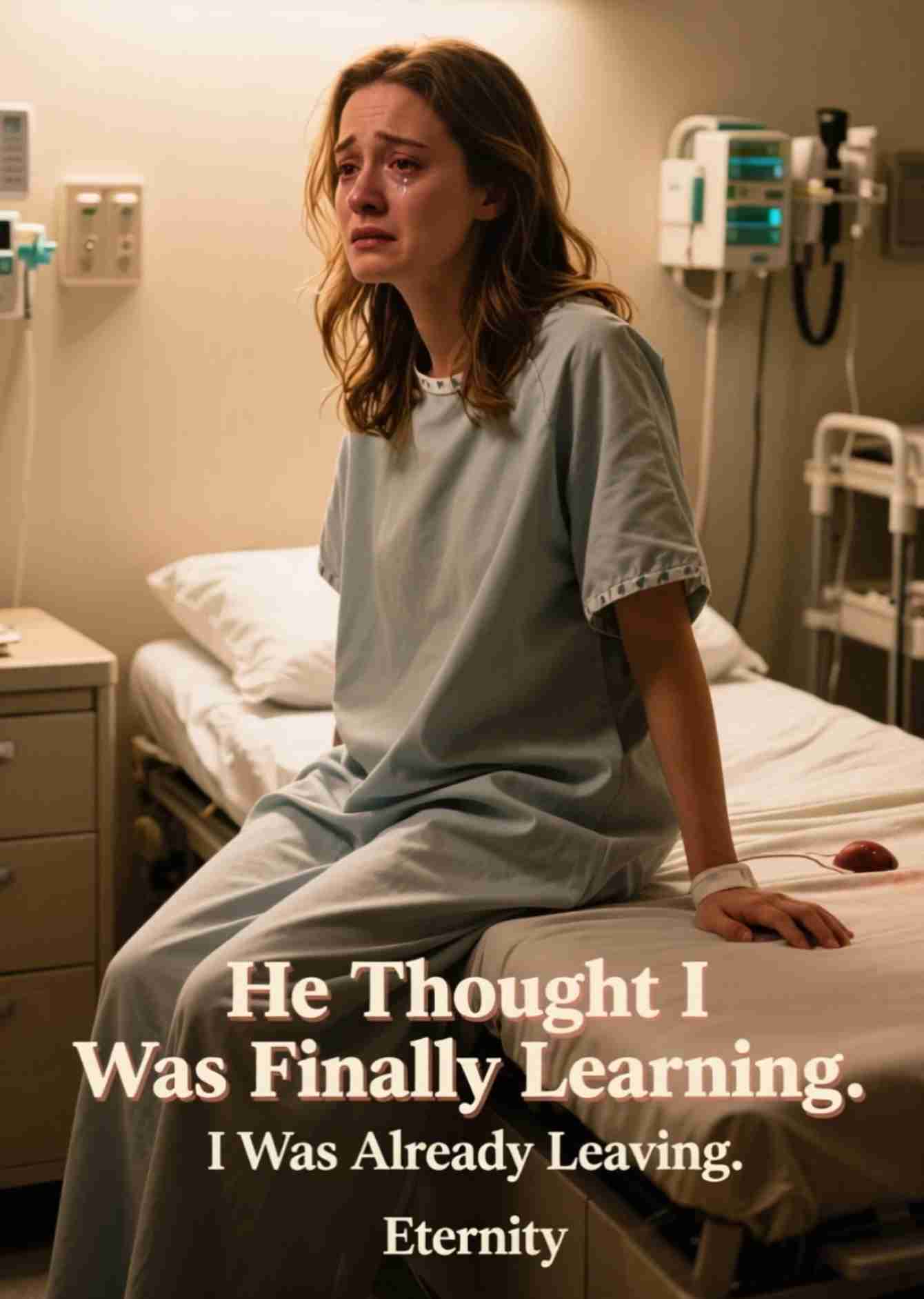
Three days ago, I was rushed into a private clinic, blood soaking through my dress, while a doctor told me there was still a chance to save the baby if the emergency deposit was paid immediately.
I called Adriano until my hands shook.
Viviana stalled the transfer.
First there was no direct authorization. Then the amount was too large. Then Adriano was in a meeting and could not be disturbed over something that might not be serious.
By the time the money came through, it was too late.
The baby was gone.
I had stayed with Adriano for two reasons: I loved him, and I believed that when it truly mattered, he would choose me.
I was wrong about both.
Our child died first.
My marriage died with it.
Chapter 1
When Adriano Morelli realized I hadn’t submitted a single household request in three days, he called me himself for the first time in months.
“Serafina,” he said, his voice smooth and patient, “the clinic has been cleared. Your file is back on priority. See? When you stop making things difficult and learn how this family works, I make sure you’re taken care of.”
He always sounded the gentlest when he was reminding me who held the power.
What he didn’t know was that by the time his name lit up my screen, the divorce papers were already drafted.
From the outside, I had everything a woman could want: a guarded penthouse, a driver on call, designer clothes, and the last name of one of the most feared men in the city.
But almost none of it was mine.
The cards were monitored. Cash had to be approved. Staff took Viviana Costa’s orders before they ever listened to me. Even the wardrobe budget, my schedule, and access to the family office all ran through her hands.
Adriano called it convenience.
Three days ago, I was rushed into a private clinic, blood soaking through my dress, while a doctor told me there was still a chance to save the baby if the emergency deposit was paid immediately.
I called Adriano until my hands shook.
Viviana stalled the transfer.
First there was no direct authorization. Then the amount was too large. Then Adriano was in a meeting and could not be disturbed over something that might not be serious.
By the time the money came through, it was too late.
The baby was gone.
I had stayed with Adriano for two reasons: I loved him, and I believed that when it truly mattered, he would choose me.
I was wrong about both.
Our child died first.
My marriage died with it.
...
When I walked out of Saint Mariel Women’s Center, the doctor’s words still rang in my ears.
“We lost the last chance to keep the pregnancy. There’s no point coming back for this one.”
By the time I arrived at Morelli Headquarters, Adriano was in his private office, signing a document Viviana Costa had just placed in front of him.
When I told him I wanted a divorce, he didn’t even look up at first. He only let out a short laugh.
“What is this now? Are you angry because I didn’t come home for dinner last night?” His tone turned faintly reproving. “Serafina, don’t say things like that. It’s childish.”
“I’m not joking,” I said. “I want a divorce.”
That finally made him lift his head. He rose and came toward me, calm, almost indulgent, as though I were simply being difficult again.
When he reached for my hand, I stepped back before he could touch me. His hand lingered in the air for a moment; a frown flickered across his face, then disappeared.
“I know you’re upset about the clinic,” he said. “But I stopped that because I didn’t want you jumping into every expensive procedure they suggested. Panic isn’t a plan.”
He glanced at Viviana, who stood quietly by the desk, polished and composed, the picture of loyal efficiency.
“She was following my instructions. How could you argue with her at the billing office in front of staff? I restored your access yesterday, so if this is about the money, it’s already resolved.”
Before I could answer, he checked his watch.
“I have people waiting on me. I run an entire organization, Serafina. I can’t keep wasting time on scenes like this.”
“I’ll come by tonight. I’ll bring dessert from Belladonna. Be good and wait for me.”
He was sure I would stay. Sure that a little tenderness would make me forgive everything.
For three years, he had been right. Even when he left me standing in the rain because Viviana needed him somewhere else, all it took was one quiet line—She works for me. Don’t make this ugly—and I would swallow the hurt and pretend I understood.
Now, dessert meant nothing. Whether he had reopened the transfer meant nothing.
If Adriano had listened to me three days ago, I might still have been foolish enough to stay.
That day, I had called him from the hospital corridor and begged him not to hang up before I finished speaking. But Viviana’s voice reached him first.
“Boss, I think Mrs. Morelli misunderstood me. I only told the clinic the amount was too large to release without a full breakdown. If she truly needs it immediately, I can force it through, even if it breaks procedure. I’m only worried the finance board will start asking questions later. I was stricter because I thought she should learn how things are handled in this family.”
That was enough for him.
“Serafina,” Adriano had said, already impatient, “do you hear how considerate she’s being? Why can’t you learn from her instead of panicking every time something goes wrong? Do what Viviana says. Once the paperwork is complete, we’ll talk.”
It was always the same whenever I needed anything. Talk to Viviana. Follow Viviana’s arrangements. Do whatever Viviana tells you.
I was Adriano Morelli’s wife, yet I had less authority in that world than the woman who managed his schedule. Even for formal dinners, political fundraisers, and private family gatherings where I was expected to stand beside him, I had to request my dresses and jewelry through Viviana, and every time she found a reason to send me back empty-handed. The shade wasn’t Adriano’s preference. The necklace was too flashy. The request had come too late. The better pieces had already been allocated.
So I would end up beside Adriano in something outdated or poorly fitted, while he leaned in close and murmured, almost gently, “Serafina, you represent me. Try not to embarrass the family.”
As if the failure were mine.
The truth was simpler: I could not even handle the smallest things because Adriano had placed everything in Viviana’s hands, then acted as though I was incompetent for depending on her. He knew the pregnancy had been unstable from the beginning. He knew the doctors had warned us that any delay could be dangerous. He knew I had been in and out of appointments for weeks.
And still, when I needed him most, he gave me the same answer he always did:
Go through Viviana.
Chapter 2
Trying to get money through Viviana had been harder than getting past Adriano’s security.
She looked over the clinic request, then set it aside. “Two hundred and eighty thousand for emergency fetal surgery?” she asked. “Do you understand what that is?”
“I understand my baby still has a heartbeat,” I said. “They need the deposit now.”
Viviana gave me the patient expression Adriano mistook for competence. “I’m not refusing you. I’m asking for the documents that justify moving that much from family reserves.”
I told her the doctors were still stabilizing me and couldn’t finish the plan until I was in surgery. She nodded as if that proved her point.
“Then you see the problem. No full plan, no itemized breakdown. If I force this through and the clinic exaggerated the risk, Adriano will answer for it.”
When I said there wasn’t time, she lowered her voice. “I know you’re frightened. But being frightened doesn’t change procedure.”
Then came the conditions: a written recommendation, a second doctor’s signature, a finance release form, confirmation from the family accountant. Every time I met one, she came up with another, all while reassuring Adriano she had everything under control.
That was the cruelest part. He did care—but he had already decided I was panicking, that the doctors had frightened me, that I was making it worse. Viviana only had to feed that belief.
By the time the money reached the hospital, the operating room no longer needed my answer. The child was already gone.
I remember lying in recovery, one hand over my stomach, waiting to feel something sharp enough to break me. Instead, what came was silence.
So when I saw the photo Viviana posted that night, I barely reacted. Her account was private, but Adriano’s circle all followed it. She was standing beside him at the shooting range, his hand over hers as he corrected her grip from behind. The caption was harmless. The image was not.
I saved it and liked it.
Adriano texted almost immediately.
[What are you doing?]
Before I could answer, another:
[It was training. Don’t turn it into something it isn’t.]
[Viviana told me what happened at the clinic. The doctor never said it was as final as you made it sound.]
I stared until the words blurred. He cared. He still thought I was lying.
Another:
[You’re upset, I understand. But don’t do this online. Since you already liked it, leave it there. Removing it now will only make people talk. Say something gracious.]
That was Adriano all over—concern wrapped around command, affection like a bandage over damage he wouldn’t face.
So I did what he asked.
Viviana is extraordinary,I typed. She manages the money, the schedule, the house, and apparently Adriano’s private training. At this point, she may as well take over the rest of my role too.
I posted it, set my phone down, and went into the dressing room.
Packing took almost no time. I had lived in Adriano’s penthouse for three years, but almost everything belonged to the Morelli family. The jewelry was logged, the gowns assigned, the safe codes not mine. Even the monthly cash was controlled by the office downstairs.
In the end, the only things I could take without questions were a few clothes from before my marriage, my passport, and the folder of personal papers Adriano had never asked about.
My phone began vibrating.
Adriano.
Then a voice note.
I listened once.
“Serafina.” His voice was tight, controlled. “Delete the comment. Then answer me.”
A pause, then: “I’m trying to help you, but I can’t if you keep shutting me out.”
I turned the phone off and dropped it into the suitcase.
At last, the room was quiet.
I stood in the middle of the bedroom and looked around. For years, I had called that place home. Now I saw it: a polished cage full of beautiful things that were never mine, a life arranged by other hands, a marriage where another woman approved what I could touch, spend, wear, and ask for.
Only then did I understand how completely I had disappeared.
Once I understood, leaving no longer felt impossible.
It felt overdue.
Chapter 3
Adriano came back fast.
His gaze passed over the suitcase by the door without stopping. Then he came toward me, still in his evening coat, carrying the familiar scent of smoke and cologne, with the faint trace of Viviana’s perfume beneath both.
“Serafina,” he said, lifting a hand toward my face. “Why did you turn your phone off?”
I stepped away. “I wanted quiet.”
His hand paused, then fell. A moment later he moved closer again and slid an arm around my shoulders as if this were still his to settle.
“This is about the Instagram post, isn’t it?”
I said nothing, and he took my silence for agreement.
“Viviana works beside me every day,” he said, his voice calm and almost gentle. “She handles my schedule, the accounts, the political arrangements. Of course people see us together. That doesn’t mean what you’re making it mean.”
“You already know how some of the old families talk about you. They think you don’t understand this life. Don’t hand them more gossip because you’re upset over something meaningless.”
He kept going, explaining the world back to me in the shape he preferred.
“What happened at the hospital was awful. I know you’re grieving. But humiliating Viviana in public won’t change any of it. She was in tears over that comment, and she was still trying to explain your side to me.”
I looked at him then and realized, with a clarity that no longer hurt, that he believed every word of it. He believed the woman who delayed my surgery had spent the evening defending me. Most of all, he believed I had exaggerated the danger.
“I give you a life where you never have to worry about anything,” he said, his expression tightening when I still did not speak. “If you keep treating Viviana like the enemy, I’m going to start thinking this has more to do with control than grief.”
Then, softening his own accusation, he added, “You’ve been through a shock. Go rest. Let me handle the rest.”
That was when I laughed.
The sound was quiet, but it stopped him.
I crossed the room, set the suitcase on the bed, and unzipped it. Inside were two sweaters, a pair of jeans, an old coat, my passport, and a folder of personal papers. Nothing else.
Adriano frowned. “What is this supposed to prove?”
I touched the sleeve of the coat. I had bought it before I met him.
“You said I never had to worry about anything,” I replied. “And yet I’m leaving your penthouse with barely enough to get through a few days.”
His face hardened. “That’s absurd.”
“Is it?” I met his eyes. “If I need cash, it goes through Viviana. If I need my schedule changed, it goes through Viviana. If I need a car outside the usual hours, it goes through Viviana. If there’s a dinner, a fundraiser, or a family event, she decides what I wear and when I’m told about it.”
I drew a breath and said the part that finally made him go still.
“Your maids carry more money in their handbags than I do.”
He started to interrupt, but I caught his sleeve and led him into the dressing room.
Past the mirrors and the gowns, beyond the jewelry drawers, stood the inner vault where the family kept cash and anything valuable enough to monitor. I pointed to the security panel beside the steel door.
“Go on,” I said. “Open it.”
His gaze moved from the keypad to me and back again.
“Code first. Then fingerprint. Then release from the family office downstairs. And whose clearance approves that final release?”
He did not answer.
“Viviana’s,” I said for him.
For the first time, real confusion crossed his face. He looked at the vault, then at the room around us, as though seeing it from a new angle. But the moment passed quickly. Whenever truth threatened him, he reached for the explanation that protected his pride.
“So that’s what this is really about,” he said at last. “Authority.”
I felt whatever remained in me turn colder still.
He still thought this was about jealousy. Not about the fact that when I needed him most, he had chosen to believe I was lying.
I let go of his sleeve and stepped back.
“It doesn’t matter what you think anymore,” I said.
His eyes narrowed. “Serafina.”
I picked up the divorce papers from the bed and held them out to him.
“This marriage is over.”
Chapter 4
For the first time that night, Adriano didn’t answer.
He stood with the divorce papers in his hand, staring at me as though this could still be folded back into place if he chose the right words.
“All right,” he said. “I should have handled this differently.”
His voice was calm, gentle. Adriano was always most persuasive when he believed he was being generous.
“Tomorrow I’ll give you direct authority over the residence office,” he said. “No more approvals, no more routing personal expenses through anyone else. If you want your own discretionary account, it’s yours. If you want the household staff answering to you, I’ll make that change.”
He watched me carefully, certain he had finally found the wound.
“And if this is about Viviana, then I’ll move her off the residential books. The estate manager, the drivers, the house staff will report to you.”
Then his tone softened again.
“And your care won’t be routed through anyone else again. I’ll cover the clinic retainer myself. Every doctor, every follow-up, every bill.”
For three years, that pattern had worked. After every humiliation, he offered a concession. After every injury, he handed me something and called it protection. For a man like Adriano, that counted as apology.
Once, it would have been enough.
But he was too late.
“Adriano,” I said, “I don’t want authority over your house. I don’t want your accounts. I don’t want the staff. I don’t want another promise that arrives after the damage is done.” I held his gaze. “I want a divorce.”
The softness left him piece by piece.
He stared at me, waiting for me to bend first. When I didn’t, something colder settled over his face.
“Enough,” he said.
“I know you’ve been on edge for weeks, but you are not making this decision in a clear state of mind.” He stepped closer, not touching me now. “You’re upset, you’re worn down, and you’re turning one bad day into something permanent.”
There was no cruelty in his tone. That was what made it unbearable. He meant every word.
“You are not walking out of here alone tonight,” he continued. “Without my name on your back, without my people watching the doors, you have no idea how exposed you are.”
I said nothing.
His jaw hardened.
“I’m trying to stop you from doing something you’ll regret when you’ve calmed down. Don’t make me lock this floor down until you come to your senses.”
Everything he took from me came dressed as protection. He had placed another woman between me and the life that was supposed to be mine because he said it made things easier. He had trusted that same woman over me while I was bleeding because he said he was preventing panic. And now he stood between me and the door, mistaking control for care.
He still believed I was safest in a cage.
I picked up my travel bag.
“Then let me regret it,” I said.
For the first time, disbelief crossed his face.
He had expected tears, rage, bargaining. He had not expected me to walk past him as though he no longer had the power to stop me.
But he didn’t follow.
Pride held him where he stood. So did certainty. Adriano had spent too long believing I could not survive outside the life he had built around me.
To him, this was still another emotional overreaction, the kind that burned hot and passed quickly, ending the way they always did. I would come back once the world outside frightened me enough.
My hand closed around the door handle.
Behind me, I heard him draw a breath, as though he might finally say something that mattered.
He didn’t.
I opened the door and stepped out.
The sound of it shutting behind me cracked through the penthouse like a gunshot.
Only then, alone in the silence, did Adriano seem to feel the first edge of something unfamiliar.
He slipped a hand into his coat and touched the brass lighter engraved with his initials—the one I had commissioned for him after he mentioned missing his father’s old lighter.
His phone lit up.
Viviana.
Don’t go after her, the message read. She’s upset, and she wants to force your hand.
A second message followed.
Let her cool off. Once she sees what life looks like without you, she’ll come back on her own.
Adriano stared at the screen, then closed his hand around the lighter until the metal bit into his palm.
Yes, he told himself. That was all this was.
In a day or two, I would understand what I had walked away from. I would come back shaken, tired, and ready to be reasonable.
And when I did, he would make sure I never spoke of divorce again.
Chapter 5
The night I left Adriano, I didn’t check into a hotel.
I went to my father.
Leone Vesper opened the door to his apartment above an old records office, took one look at me and the bag in my hand, and stepped aside without a word.
That silence hurt more than pity would have.
My father was a forensic accountant who worked private fraud cases, untangling shell companies, port accounts, false invoices, and quiet disappearances buried inside respectable ledgers. He had hated my marriage from the beginning. When I chose Adriano over him, we stopped speaking for almost three years.
On the day I married into the Morelli family, he sent me one message:
If you build your life around a powerful man’s protection, don’t be surprised when he mistakes dependence for devotion.
He had been right.
At first, Adriano liked calling me clever. He liked introducing me as the wife who understood numbers better than half the men around him. Then Viviana arrived, and suddenly my judgment was too soft, my instincts too emotional, my skills too impractical for his world.
By the end, I was no longer a woman with a future of her own. I was a woman who had to ask permission to touch one.
My father handed me a glass of water and waited until I stopped shaking.
Then he sat across from me and said, “I assume you didn’t come here for comfort.”
His voice was dry, familiar, and steadier than kindness could have been.
“No,” I said.
“Good.” He slid a folder across the table. “I’m consulting on a freight investigation down by the south docks. Missing cargo, ghost vendors, port money disappearing into shell accounts. Long hours. Dirty places. Men who lie as naturally as they breathe. Interested?”
I stared at him.
He lifted a brow. “What? Too used to polished floors and drivers opening doors for you?”
For the first time in days, I almost smiled.
“No,” I said. “I’m interested.”
He nodded once, as if that settled it.
“Then shower, sleep a few hours, and be downstairs at six. I’m not delaying work because your marriage collapsed.”
Under my father’s roof, there was no space for melodrama.
By the end of the week, I was living out of a duffel bag and spending my days in container yards, customs offices, and temporary workrooms that smelled like diesel, paper dust, and bad coffee.
The work was hard, exacting, and nothing like the life I had left behind.
It was also the first thing that had felt real in years.
I still knew how to follow altered books. I still knew how to spot staggered transfers, layered payments, and false vendor trails. I knew when a dock supervisor was stalling, when a clerk was frightened, and when numbers had been moved simply because someone assumed no one would notice.
Bit by bit, the woman I had been before Adriano began to return.
One afternoon, after I traced a missing shipment through three fake companies and a dead-end warehouse account, the team lead slapped the file shut and gave me a long look.
“I thought Vesper dragged you in because he felt sorry for you,” he said. “Didn’t realize you were useful.”
I wiped dust from my hands and smiled. “I’m starting to remember that myself.”
That evening, the team ate takeout outside the temporary field office while forklifts moved under the floodlights beyond the fence. Someone told a bad joke. Someone else laughed. For the first time in a long while, I laughed too.
Then a woman’s voice cut across the yard.
“Well,” she said lightly, “this is unexpected.”
Chapter 6
I turned and saw Viviana standing just inside the gate, one hand resting on the chain-link fence as if the whole dockyard amused her.
She looked absurd there in a pale coat and narrow heels, all perfume and polish in a place that smelled of diesel, rain, and rust. Her gaze moved over me slowly, taking in the dust on my jeans, the clipboard in my hand, and the team behind me eating takeout beside stacked crates.
“So this is where you ended up,” she said lightly. “I was wondering how long you’d last before finding somewhere more suited to you.”
I looked at her shoes sinking into the gravel. “You always did look more comfortable in my life than I ever was.”
Her smile tightened.
Before she could answer, I added, “Watching you take over my schedule, my home, and my husband was educational. It’s impressive how far ambition can go when it calls itself loyalty.”
A car door shut behind her.
Adriano stepped out of a black sedan and crossed the yard.
“What’s going on?” he asked.
Viviana changed instantly. Her shoulders drew in, and her voice softened.
“Nothing. I only told her you were worried. I thought if she saw you came all this way, she might stop being angry.” Then she lowered her eyes. “I didn’t mean to upset her.”
My grip tightened on the clipboard.
Adriano looked at me, and for a second something unreadable crossed his face. My hair was tied back badly, my hands were rough with paper cuts and dust, and there was nothing polished left about me.
“Serafina,” he said, quieter now, “what are you doing here?”
I almost laughed.
He came closer. “You’ve barely recovered, and you’re working in a freight yard.”
He reached for my arm, determined to yank me from the scene and force me back to the place he deemed rightfully mine.
“Come home,” he said. “Whatever point you were trying to make, it’s enough.”
I stepped away before he could touch me.
The yard had gone quiet around us.
Adriano lowered his voice. “Viviana was trying to help. You don’t need to keep punishing everyone because you’re hurting.”
“Help?” I said. “If this is what help looks like, you should both be proud.”
His expression tightened.
He glanced over the floodlit yard, taking in the portable office, trucks and dust, his gaze sharpening in obvious distaste.
“This is not where you belong,” he said. “Get your things. I’ll have the car brought around.”
One of the women from the audit team leaned toward me and whispered, “Your husband?”
I kept my eyes on Adriano. “My ex. He’s just behind on the paperwork.”
Even Viviana’s face changed at that.
Adriano stepped in front of me.
“Don’t do that,” he said quietly. “Don’t talk about us like that in front of strangers.”
“Then stop acting like I’m still yours to collect.”
His jaw set.
“I came because you walked out while you were still under post-op care,” he said. “You’re exhausted, emotional, and standing in the middle of a freight yard like this is normal. You don’t leave my protection in this condition and expect me not to come after you.”
“There it is again,” I said. “You always are.”
Something in my tone must have unsettled him, because his patience thinned.
“Fine,” he said, pulling out his phone. “If you insist on acting like none of this matters, maybe you need to understand what life looks like without me fixing things behind you.”
I knew exactly what he meant before he started dialing: the clinic, the specialists, the money he still thought gave him the final word.
He put the call on speaker.
“Dr. Salerno,” Adriano said, his gaze never leaving mine, “scale back the emergency interventions on Serafina’s file unless there’s an actual medical need. My child is not so fragile that every bout of anxiety becomes a crisis, and letting her spiral like this is worse for the baby than anything else.”
He paused, waiting for fear.
What came back was silence.
Then the doctor spoke, his voice strained. “Mr. Morelli... what are you talking about?”
Adriano’s expression sharpened. “Her treatment.”
Dr. Salerno took a breath.
“I assumed you’d been told. After the delay, there was no way to save the pregnancy...”